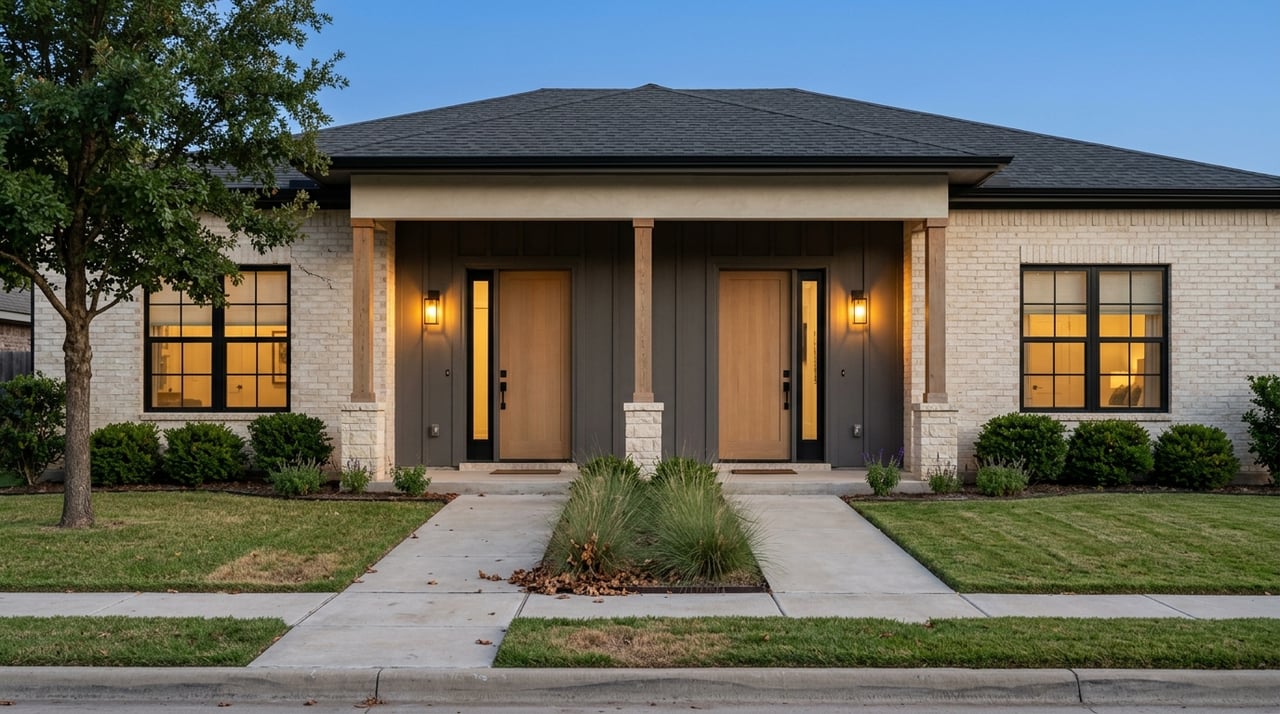
Denton Small Investment Properties Worth Considering
If you want to buy your first small investment property in Denton, it helps to know one thing up front: renter demand here is broader than many people assume. Denton is not just a college town, and that matters when you are deciding what to buy, how to budget, and which rental strategy makes sense. In this guide, you’ll learn which small property types may offer the cleanest entry, what to watch for with local rules, and how to think about demand beyond the student market. Let’s dive in.
Denton is a growing city with 165,998 residents in the 2024 ACS estimate, a median age of 30.9, and 4.3% population growth from 2023 to 2024. The city also reports 56,664 households, 2.53 persons per household, a 50.0% owner-occupied housing rate, median gross rent of $1,420, and a median value of owner-occupied homes of $348,200.
That last number is important if you are looking for a smaller investment property. Denton County’s median owner value is higher at $437,200, and median gross rent is higher at $1,728, which suggests the city of Denton may offer a relatively lower-cost entry point than the broader county. For many first-time investors, that can make Denton worth a closer look.
A lot of buyers look at Denton and think only about student rentals near campus. Student demand is certainly part of the picture, with UNT reporting 43,567 total enrollment in fall 2025 and TWU reporting 15,424 total enrollment in fall 2025.
But Denton’s renter base is wider than that. The city profile shows a median household income of $80,908 and 41.1% bachelor’s-or-higher attainment among adults 25 and older, while major employers include UNT, Denton ISD, Peterbilt, county and city government, two hospitals, and several manufacturing and logistics employers.
That means your future renter could be a student, but it could also be a faculty or staff member, a healthcare worker, a government employee, or another workforce household. For a first-time investor, that broader demand base can open the door to more flexible buying strategies.
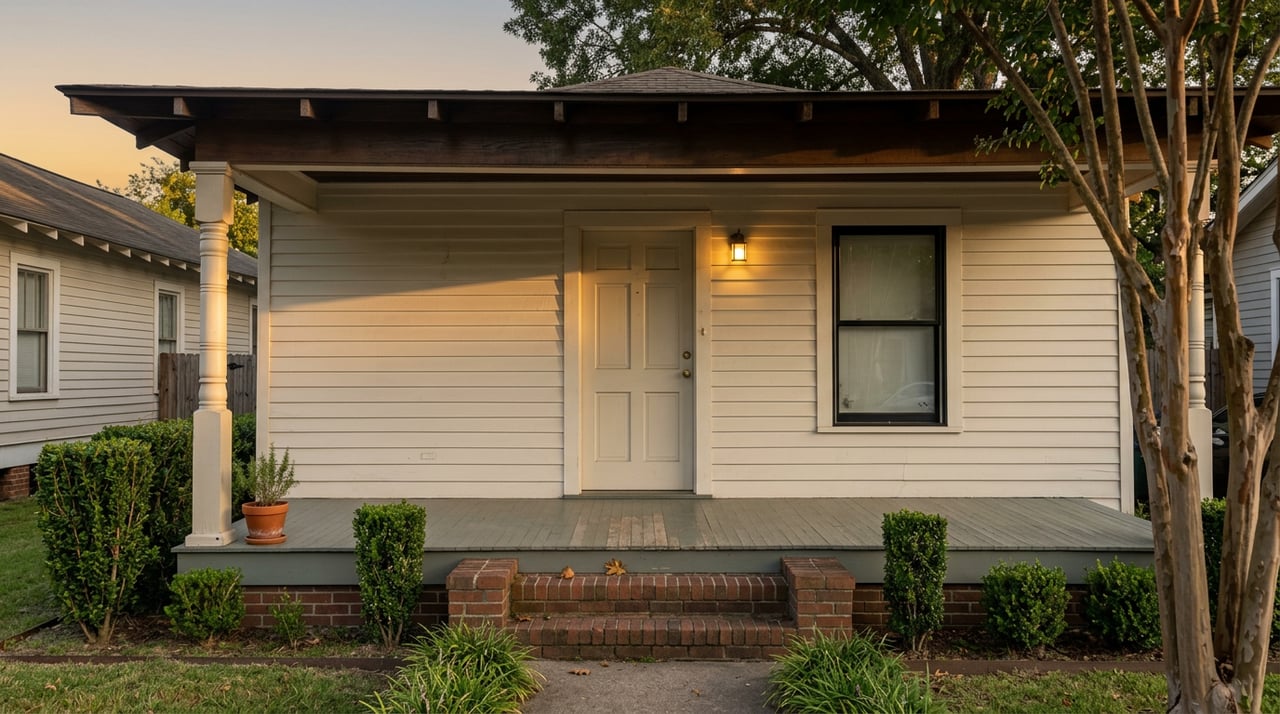
For many buyers, a small single-family home is the cleanest first-rental entry in Denton. A two- or three-bedroom house with parking, a practical yard, and easy maintenance may appeal to young professionals, small households, faculty and staff, or roommates.
The key is flexibility. A layout that works for several kinds of renters can give you more leasing options than a house designed around a very narrow use case.
If you want multiple income streams from one address, small multifamily can be attractive. Denton’s development code includes site and building design standards for duplex, townhome, triplex, and fourplex dwellings, which tells you these property types are part of the local housing conversation.
That said, you should never assume a conversion or small multifamily plan will work just because the idea looks good on paper. Before you move forward, verify zoning, lot dimensions, setbacks, parking, and any other city requirements tied to that property.
An accessory dwelling unit, or ADU, can be another interesting path if the property and zoning allow it. Denton defines an ADU as a subordinate dwelling unit added to, created within, or detached from a single-family residence, and the city handles permits and inspections through its development-services process.
For some buyers, that creates flexibility. An ADU may support an owner-occupant rental plan, added income potential, or multigenerational use, but only after you confirm the code and permit path for that specific lot.
A house near UNT or TWU can look appealing because demand feels obvious. But your best Denton investment may not be the property that leans hardest into a student-housing format.
Denton’s affordable housing needs analysis found demand across studio, one-bedroom, two-bedroom, three-bedroom, and four-bedroom units. It also noted that the city’s renter needs include non-student young adults and workforce households, while warning that student-housing-style four-bedroom, four-bath units could face oversupply risk relative to broader workforce demand.
That is a useful reminder for first-time investors. A campus-area house may work well as a long-term rental, especially if it also appeals to renters outside the student market, but a highly specialized layout may narrow your pool.
If you are comparing rental strategies, do not assume short-term rental is the easiest path. In Denton, a short-term rental is defined as a dwelling unit or bedroom rented for 24 hours to 29 consecutive days, and the city requires annual registration, charges a $100 fee, and states that 2025 amendments add requirements for short-term rentals in residential zoning districts and multifamily developments.
For many first-time investors, that means a long-term rental may be the simpler starting point. A standard lease strategy can be easier to underwrite and may better match the city’s broader workforce and non-student renter demand.
One of the biggest mistakes first-time investors make is focusing only on the mortgage payment. That can make a deal look better than it really is.
A more realistic budget should account for the full operating picture. Rental expenses commonly include maintenance, insurance, taxes, and interest, and budgeting guidance for landlords also points to utilities, major improvements, vacancy reserves, advertising reserves, fees, and professional services.
Because Denton’s median rent and median home value are not especially far apart, you should leave room for real operating costs rather than assuming the rent alone will create strong cash flow. That is not a deal forecast. It is simply a disciplined way to evaluate whether the property still works after normal ownership costs.
Yes, if you do not plan to manage the property yourself, management should be in your numbers from day one. A property manager may handle tenant selection, rent collection, maintenance coordination, and day-to-day issues.
That does not mean every investor needs management. It does mean your underwriting should reflect the ownership style you actually want, not the one that only works on paper.
Before you make an offer, confirm what the property legally is today and what it could legally become. The city points buyers to its development code and zoning resources for new development and land-use questions, and it has dedicated pages for ADUs and short-term rentals.
That matters if you are evaluating a single-family home with an extra structure, a possible duplex conversion, an ADU idea, or a room-rental concept. Your plan needs to match the lot, zoning, design standards, parking setup, and approval path tied to that specific property.
As you think about marketing and managing a rental, keep fair housing and local nondiscrimination rules in mind. Denton’s non-discrimination ordinance states that housing sale and rental practices cannot discriminate on protected bases.
For you as an investor, that means your marketing, screening, and lease administration should be handled carefully and consistently. A good rental strategy is not just about income potential. It also needs to fit the rules that govern housing practices locally.
If you are new to investing, it often helps to start with properties that are easier to understand and easier to rent. In Denton, that may mean a modest single-family home, a true duplex, or a property with income potential that can be verified through city rules and practical numbers.
Look for flexibility, not gimmicks. A property that can serve several renter groups, with manageable upkeep and a clear legal use, may give you a steadier first step into the market than a highly specialized setup.
If you want help sorting through investment-capable homes, duplex opportunities, or properties with accessory apartments in Denton and nearby DFW communities, Lorraina Moore can help you evaluate options with a practical, local-first approach.




Lorraina Moore is dedicated to helping you find your dream home and assisting with any selling needs you may have. Contact her today to start your home searching journey!