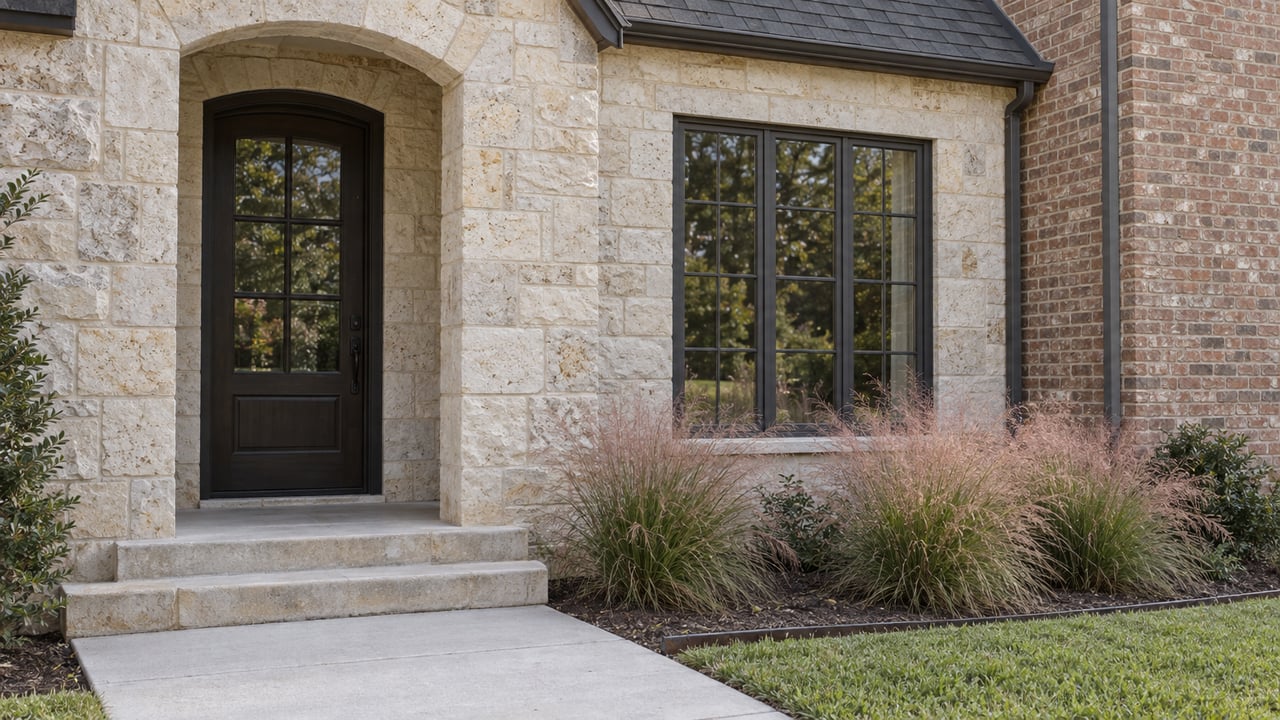
Why Two Argyle Homes at the Same Price Don't Cost the Same Each Month
Pull up two Argyle listings priced within a few thousand dollars of each other and the math should be simple. Same price, same loan amount, same rough monthly payment. In Argyle that assumption breaks more often than it holds, because the sale price only covers principal and interest. The tax line and, in a lot of new-construction sections, a special assessment line ride along separately, and those two lines can vary more by which parcel you buy than by what you paid for it.
The reason comes down to overlapping jurisdictions. A home address in Argyle can sit inside the Town of Argyle or outside it in unincorporated Denton County or, in some cases, inside the neighboring Town of Northlake. It can feed Argyle ISD or Northwest ISD depending on the exact lot. And it can carry a Municipal Utility District or Public Improvement District tax on top of the standard rate, or carry neither. None of that shows up in the list price. All of it shows up in the first tax bill.
Every property in the area pays into the same basic set of taxing entities: the school district, the county, the community college district, and the city if the parcel sits inside town limits. Argyle ISD's operating and debt rate has run around $1.17 per $100 of assessed value in recent tax years, the Town of Argyle's rate has sat near $0.34, and Denton County and the community college district add smaller amounts on top. Combined, a property with no special district typically lands somewhere in the 1.7 to 1.8 percent range.
That's the floor. A Municipal Utility District, created to fund the water, sewer and drainage infrastructure a new subdivision needs before a city extends its own services, adds its own rate on top of that floor. Denton County MUD rates run anywhere from about $0.19 to more than $1.00 per $100 of assessed value depending on the district and how far along it is in paying off its construction bonds. A Public Improvement District works differently. It's usually a fixed annual assessment rather than a rate, often funding neighborhood amenities and entrance features, and it can sometimes be paid off early in a lump sum under the Texas Local Government Code.
Neither of these is a red flag on its own. They're the financing tool that made a lot of new construction in this corridor possible in the first place. The problem is that they don't show up as a line item until the appraisal district posts the account, and the effect on a monthly payment is large enough that it changes what a buyer can actually afford to bid.
Here's what that looks like on paper, using a $650,000 home as the constant.
| Scenario | Effective tax rate | Annual tax | Monthly equivalent |
|---|---|---|---|
| Older Argyle section, no MUD or PID | ~1.70% | ~$11,050 | ~$921 |
| Canyon Falls, MUD-assessed section | ~2.54% | ~$16,510 | ~$1,376 |
Same price. Same loan size. A gap of roughly $455 a month, or about $5,460 a year, based purely on which side of a district boundary the lot falls on. Canyon Falls sits on the Argyle-Flower Mound line, is known for its trail network and canyon preserve, and carries genuine amenity value. It also carries a MUD assessment that older, already-built-out sections of Argyle simply don't have, because those bonds were paid off or never issued in the first place.
The other trap is more basic than tax math. It's assuming that a community marketed under an Argyle address is actually inside Argyle, zoned to Argyle ISD, or subject to the same fee structure as the rest of town.
Harvest, the agrarian-themed master-planned community where David Weekley Homes recently opened The Retreat at Harvest alongside sections like Harvest Orchard Classic and Harvest Townside, is a good example. The majority of Harvest sits inside the Town of Northlake, not Argyle, and most of its lots feed Northwest ISD rather than Argyle ISD, even though the community is consistently marketed and searched under the Argyle name. The Town of Northlake says Harvest's Public Improvement District was dissolved on October 10, 2024, though older marketing materials or secondhand research might still refer to it.
Canyon Falls has its own version of the same problem. It straddles Argyle, Flower Mound, and pockets of unincorporated Denton County, and while most of it feeds Argyle ISD, some sections are zoned to Lewisville ISD instead. Two homes on the same street, sold by the same builder, under the same community name, can carry different school assignments and different taxing entities depending on which side of an internal boundary line the lot sits on.
None of this is disclosed in a headline or a floor plan brochure. It shows up when you pull the specific parcel on the Denton Central Appraisal District's site and look at which taxing units are actually listed against that address.
The dollar difference matters on its own, but it matters more because of how a lender treats it. Under Fannie Mae's underwriting guide, MUD taxes, PID assessments, and HOA dues all get counted in a buyer's debt-to-income calculation right alongside principal and interest. A community with a lower list price but a heavier MUD and PID load can actually reduce how much home a buyer qualifies for, even though the sticker price looks like the better deal. Meanwhile, a higher-priced home in an older section with no special district can sometimes qualify more comfortably, because none of that extra monthly obligation is competing for room in the same ratio.
This is the part that catches people off guard, because it runs backward from how most house hunting works. The instinct is to compare list prices first and worry about taxes later. In Argyle's newer corridors, the tax and assessment structure needs to be part of the initial comparison, not an afterthought discovered during underwriting.
A few concrete steps handle almost all of this before it becomes a surprise:
None of these require a specialist. They require knowing to ask before the option period ends rather than after the first tax bill arrives.
Does every new-construction community in Argyle carry a MUD or PID? No. Some do and some don't, and it can vary by phase within the same community. Harvest's PID, for instance, was dissolved in 2024, while other master-planned sections in the area still carry active MUD assessments. The only reliable way to know is to check the specific parcel.
If a listing says "Argyle," how do I know if it's actually inside city limits and Argyle ISD? Search the address directly on the Denton Central Appraisal District's site, which lists every taxing entity tied to that parcel, and confirm the school assignment separately, since a community's marketing name and its actual jurisdiction don't always match.
If you're comparing two Argyle addresses and the tax lines don't add up the way the listings suggest, DFW Moore Homes can pull the actual MUD, PID and school-zone facts for that specific parcel before you write an offer. Let's Connect.
This article is general information, not legal, tax or financial advice. Consult a qualified professional about your situation.
Lorraina Moore is dedicated to helping you find your dream home and assisting with any selling needs you may have. Contact her today to start your home searching journey!