Explore Denton Historic Neighborhood Homes and Styles
If you love homes with character, Denton gives you more than one version of "historic." From streets lined with early 20th-century architecture to postwar neighborhoods with strong mid-century style, the city offers a wide range of older homes near downtown, parks, museums, and the university area. If you are trying to decide where to focus your search, this guide will help you understand Denton’s historic neighborhoods, the home styles you are likely to see, and what to know before you buy. Let’s dive in.
Denton’s historic identity starts around the courthouse square, where the city was established in 1857 and incorporated in 1866. According to the City of Denton, the courthouse square, downtown district, and historic neighborhoods help define the city’s vibrancy, authenticity, and small-town appeal.
That character is not limited to one small pocket. The city reports 69 local historic landmarks, three local historic districts covering more than 80 acres on the west and north sides, and National Register historic districts that include the Courthouse Square district and the West Denton Residential district.
For you as a buyer, that means Denton offers real variety. Some areas have formal local protections, some are recognized through the National Register, and some are surveyed character neighborhoods that the city continues to study.
Adopted in 1985, the Oak-Hickory Historic District includes 70 buildings along Oak, Hickory, Denton, and Mounts streets. The city describes it as one of Denton’s oldest and finest collections of homes.
You will find a mix of Queen Anne, Prairie, Craftsman bungalows, early 20th-century Revival styles, and some Mid-Century Ranch homes. Because it sits in a university-adjacent area near the city core, the neighborhood feels connected to downtown rather than set apart from it.
The West Oak Area Historic District was adopted in 2008 and includes 89 buildings along Oak, Jagoe, Marietta, Bradley, Thomas Streets, and Houston Place. This area blends early 20th-century Revival styles with Craftsman bungalows, cottages, Minimal Traditional homes, and Ranch homes.
If you like historic neighborhoods with a broad mix of house sizes and eras, West Oak is worth watching. It is part of Denton’s west-side historic fabric close to downtown and the university area.
Adopted in 2019, the Bell Avenue Historic District spans a three-block stretch of North Bell Avenue in the Idiot’s Hill neighborhood and includes 28 buildings. The district features Craftsman bungalows and Ranch-style homes.
City survey work describes Idiot’s Hill as almost entirely residential, with winding streets influenced by Cooper Creek. It also connects to downtown through University Drive and Sherman Drive, which helps balance residential feel with access to city amenities.
West Denton is a National Register historic district located about a half-mile west of the courthouse square. It is primarily residential and sits within walking distance of the central business district, with connections to downtown via West Hickory and West Oak.
The south end along Oak and Hickory includes larger lots and grander homes. In the central and northern sections, you are more likely to see modestly scaled Craftsman Bungalow and Minimal Traditional homes.
This district also includes detached garages, garage apartments, carriage houses, and other outbuildings. For buyers who value a layered streetscape and properties with added flexibility in site layout, that can be a meaningful part of the neighborhood’s appeal.
Not every notable older neighborhood in Denton is a formal historic district. Southridge is one of the city’s best-known post-World War II neighborhoods, and the city says its homes epitomize mid-century style.
The city also continues survey work in places like Bolivar and Idiot’s Hill. That matters because it shows Denton’s historic character extends beyond the formally designated districts, giving you more options if you want architectural personality without limiting your search to just a few mapped areas.
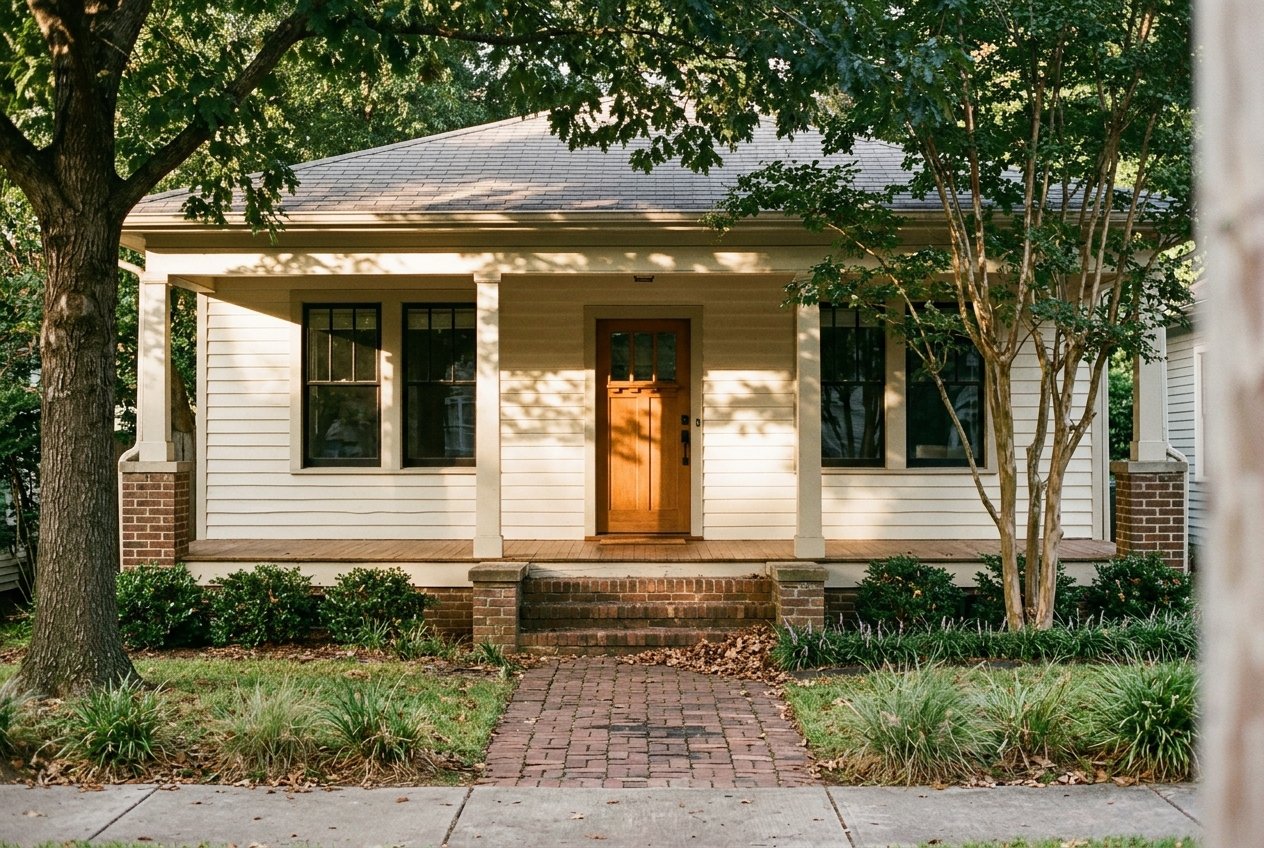
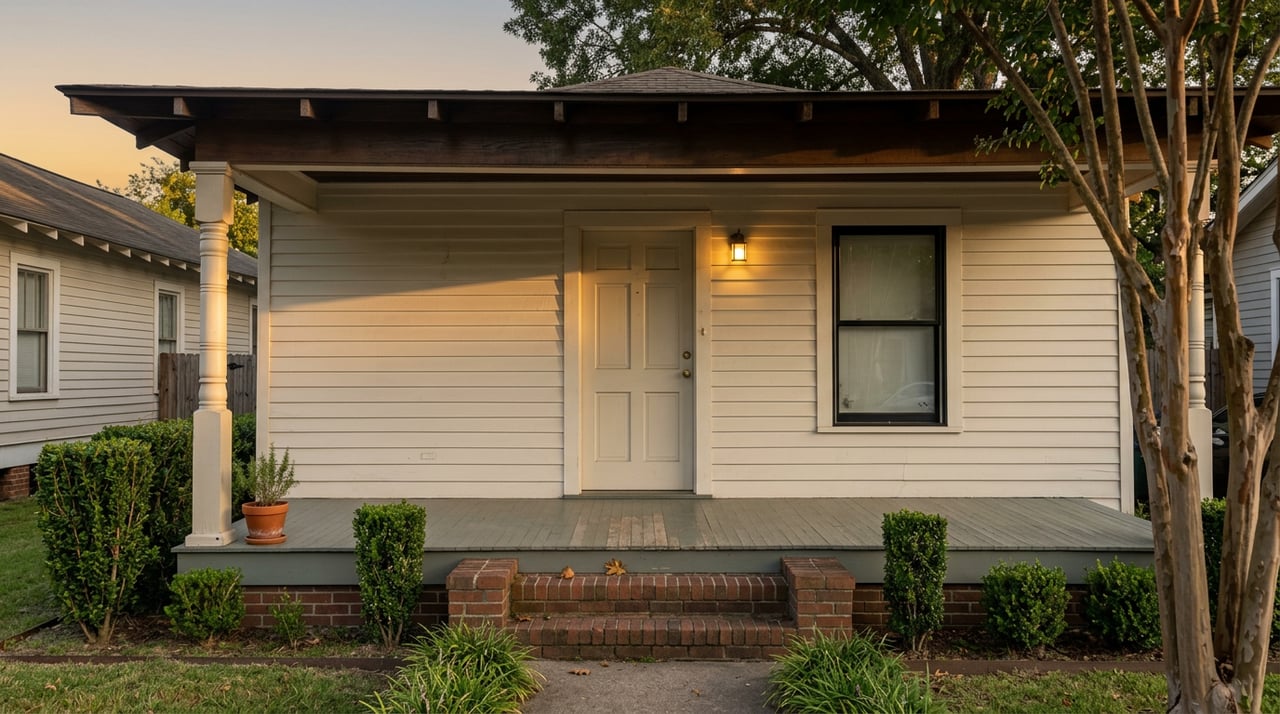
Craftsman homes are among the most recognizable styles in Denton’s older neighborhoods. City survey materials describe them as wood-framed homes often finished in clapboard or brick veneer, with wide porches, low roof angles, exposed rafter tails, and tapered wood porch columns set on brick piers.
You may also notice front-facing, side-gable, cross-gable, or hipped roof forms. These homes often deliver the classic historic look many buyers picture when they start exploring older parts of Denton.
In some of Denton’s most established historic areas, you may see more ornate homes with decorative massing and stronger visual detail. These include Queen Anne and early 20th-century Revival styles.
If you are drawn to homes with more architectural flair, these styles can stand out quickly. They are often part of the reason a street feels visually rich and distinct from newer subdivision development.
Minimal Traditional homes show up in several Denton historic areas, especially in neighborhoods that developed across multiple decades. These homes are generally simpler in form than earlier decorative styles.
For some buyers, that simplicity is a plus. You still get the charm of an established neighborhood, but often with a more compact footprint and cleaner exterior lines.
Denton’s historic story also includes postwar architecture. In neighborhoods like Southridge and in parts of Oak-Hickory, West Oak, and Bell Avenue, Ranch and mid-century homes add another layer to the city’s housing mix.
These homes tend to have lower profiles and less ornament. If you prefer a more understated style but still want an older home in an established setting, this can be a strong fit.
One of the biggest differences between Denton’s older neighborhoods and newer subdivisions is the sense of architectural layering. You are likely to notice changing rooflines, varied setbacks, mature blocks, and a mix of lot sizes and house scales.
In West Denton, the city notes that setback patterns are fairly consistent street by street, with larger homes on larger lots set farther back. The area also includes many ancillary structures, which can add to the visual character and functional variety of a property.
That often creates a neighborhood feel that is less uniform and more textured. For many buyers, that is exactly the appeal.
Denton’s historic neighborhoods are not just about architecture. They are also closely tied to the city’s walkable, cultural core.
The city describes downtown Denton and the Square as the historic heart of a growing city, with a downtown plan focused on preserving character while enhancing the pedestrian experience. There are all-way pedestrian crossings around the Square, and city parking lots are within a five-minute walk of the courthouse square.
The Original Denton District is also a state cultural district centered on downtown. City materials describe it as a walkable zone that includes downtown, Quakertown Park, and Oakwood Cemetery.
For day-to-day living, that can mean easier access to dining, museums, public art, events, and live music while still living on quieter residential blocks nearby. If you want a neighborhood with both personality and proximity, Denton’s older areas offer a compelling mix.
If you are considering a home in one of Denton’s local historic districts, it is important to understand how exterior work is reviewed. In Denton, historic designation does not change how a property is used, but it can affect exterior repairs and alterations.
The city requires a Certificate of Appropriateness for exterior repairs and alterations, additions, demolition, and new construction in the Oak-Hickory, West Oak Area, and Bell Avenue historic districts, as well as on local landmarks and certain state or national historic properties.
Compatibility review may also involve details such as accessory-structure scale and setback, new exterior materials, and window style and sizing. Before you make an offer, it is smart to confirm whether the home falls within a district or designation that requires this review.
Denton also offers a possible financial benefit for qualifying rehabilitation work. The city states that owners of designated historic buildings or sites may qualify for an annual tax exemption of up to 50% of the assessed value for eligible rehabilitation.
If that is part of your plan, be sure to review current application timing and qualification details with the city. This is one area where early research can make a real difference.
If you enjoy understanding the story behind a property, Denton gives you good local resources to start with. The city points residents to historic resource surveys, along with the Emily Fowler Central Library and Denton Public Library genealogy resources.
That can be especially helpful if you want to learn more about a home’s architectural background, development period, or place within the neighborhood over time.
If you are still deciding which part of Denton fits you best, start by comparing what matters most in your daily life. Some buyers want ornate early architecture near the city core, while others prefer a simpler bungalow, a Ranch home, or a mid-century feel in an established neighborhood.
A helpful way to narrow your list is to focus on:
The right fit usually comes from balancing home style, neighborhood setting, and how you want to live day to day.
If you are thinking about buying in Denton and want help comparing historic neighborhoods, understanding district differences, or spotting the right property for your goals, Lorraina Moore can guide you through the process with local insight and hands-on support.
Lorraina Moore is dedicated to helping you find your dream home and assisting with any selling needs you may have. Contact her today to start your home searching journey!