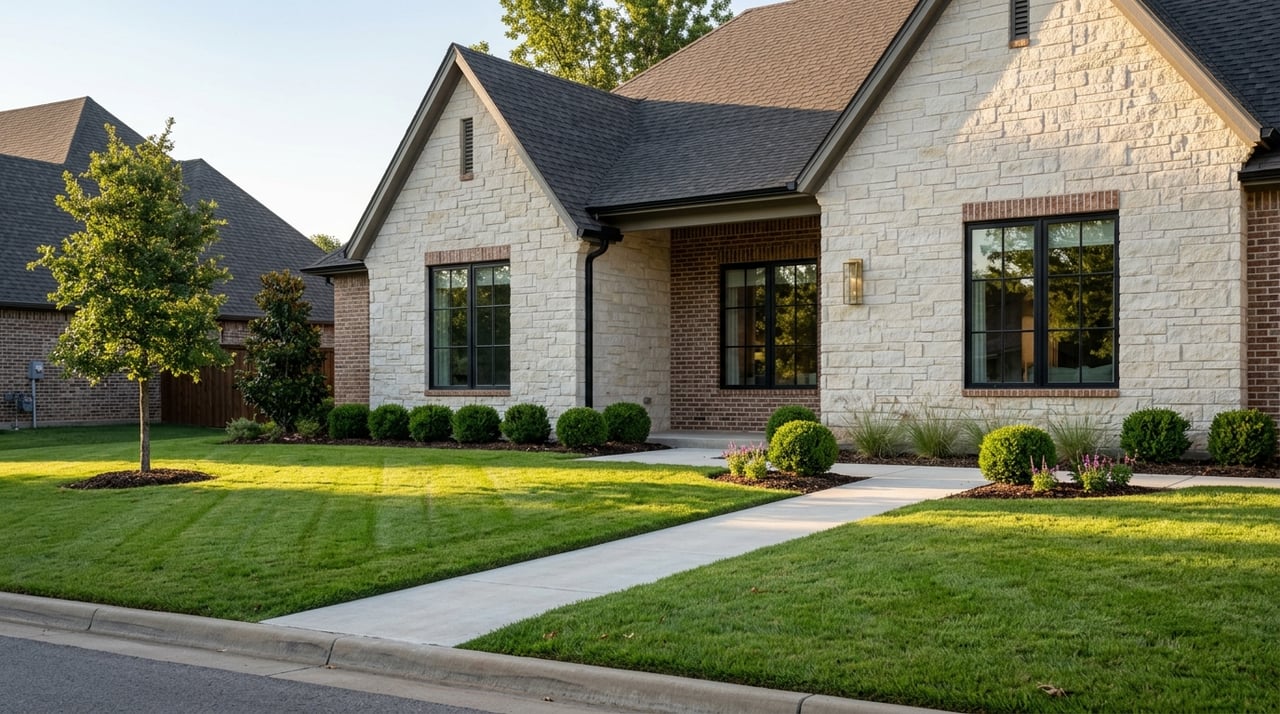
How Flower Mound Property Taxes and HOAs Shape Your Budget
Two Flower Mound homes can have the same price but very different monthly payments. The reason is not just your interest rate. Property taxes, MUDs, and HOA dues can add hundreds of dollars per month to your budget. If you are comparing neighborhoods or deciding between an older subdivision and a newer master-planned community, understanding these line items will help you buy with confidence.
In this guide, you will learn how Flower Mound property taxes are built, what MUDs and PIDs are, how HOA dues vary, and how to verify the real monthly cost on any address. You will also see a simple comparison using two similarly priced homes to show the impact on your payment. Let’s dive in.
Your annual property tax is the sum of several local taxing units. The exact mix depends on the address. That is why two homes on different streets can have different bills.
You pay a municipal tax to the Town of Flower Mound and a county tax to Denton County. For tax year 2025, the Town adopted a rate of 0.387277 per $100 of value and offers a local homestead exemption that can reduce the Town portion for owner-occupied homes. You can review the Town’s adopted rate and exemption details on the Town’s My Tax Dollars page at Flower Mound’s official site. Denton County adopted 0.185938 per $100 for 2025, according to the county’s Truth in Taxation table at the Denton County Tax Office.
Most Flower Mound addresses fall in Lewisville ISD, but some areas are in Argyle ISD, Denton ISD, Northwest ISD, or small pockets in other districts. Each ISD sets its own rate, and this line is often the largest share of your bill. Sample 2025 adopted rates from the county table include Lewisville ISD 1.117800, Argyle ISD 1.172700, Denton ISD 1.206900, and Northwest ISD 1.084100. You can confirm current adopted rates by reviewing the county’s table at the Denton County Tax Office.
Some newer areas include a Municipal Utility District, or MUD. A MUD levies its own tax to fund water, sewer, drainage, and infrastructure. That tax appears as a separate line on your county bill. The Canyon Falls MUD, for example, showed an adopted 2025 rate of 0.750000 per $100 in the county table. To learn what a MUD is and how districts work statewide, consult the Texas Comptroller’s Special Purpose District database at the SPDPID site.
Properties can also sit in PIDs or other special units, which will be listed on the tax statement if they apply. Always check the address-specific tax bill to see every taxing unit.
Depending on the location, you may also see community college, hospital district, or emergency services district entries. The county’s Truth in Taxation page lists adopted rates for all Denton County taxing entities and is the best place to review the most recent numbers at the Denton County Tax Office.
Exemptions reduce the taxable value for specific portions of your bill. The Town of Flower Mound’s local homestead exemption, adopted in 2025, is the greater of $5,000 or 20% and applies only to the Town portion for owner-occupied homes. School districts also have state and local exemptions that affect the school share. Review details and eligibility, then file with the appraisal district. You can see the Town’s exemption summary at Flower Mound’s My Tax Dollars page.
HOA dues vary widely and can change year to year. Some established neighborhoods have modest annual dues, while master-planned communities with pools, trails, and front-yard maintenance can carry higher assessments.
If an area also has a MUD, remember that the HOA dues and the MUD tax are separate. The HOA funds community operations and amenities. The MUD funds infrastructure and appears on your tax bill.
To show how these pieces affect your payment, here is an illustration using the same price in two different areas. Assumptions are for example only. Always use your lender’s current rate and your property’s exact taxable value.
Assumptions:
Difference: House B is about $513 more per month in this example. Most of that gap comes from the added MUD tax and the higher HOA assessment, along with the ISD rate difference.
Before you write an offer, pull the exact figures you will pay. Here is a quick checklist you can follow.
Ask the seller or listing agent for the most recent property tax bill and the last three years of tax history. The bill lists every taxing entity that applies. Cross-check entity names and rates using the county’s table at the Denton County Tax Office.
Use the county’s address-level calculator to estimate current taxes with the correct taxing units. Run the Denton County Tax Estimator.
If a MUD or PID appears on the tax bill, look it up. Many MUDs post their adopted rate orders online and file data with the state. You can search district records at the Texas Comptroller’s SPDPID database and view example district rate documents such as the Canyon Falls MUD rate order here.
Confirm the property’s school district assignment. ISD lines can change as districts open new schools, and the ISD rate is often the largest piece of your bill. Review current adopted rates on the county’s Truth in Taxation table.
Request the HOA resale package and the association budget, recent meeting minutes, aging of receivables, and reserve study. Use these to understand dues, upcoming projects, and the risk of special assessments.
Ask the title company to confirm all taxing units that will appear on the closing statement and how property-tax proration will be handled at closing.
If the home is in a MUD, ask how utilities are billed. Some services may be through the Town, others through the MUD. You can find a general overview for Canyon Falls in the community FAQ.
It is easy to mix up MUDs and HOAs, but they do very different things and affect your budget in different ways.
Buying with clear numbers is the fastest way to feel confident about your home and your payment. If you want a side-by-side budget for homes you like in Flower Mound or nearby Denton County suburbs, reach out. Lorraina Moore will walk you through the tax units, HOA documents, and monthly cost so you can make a smart, comfortable decision.
Lorraina Moore is dedicated to helping you find your dream home and assisting with any selling needs you may have. Contact her today to start your home searching journey!